Core Technology Platforms
Systematic, laboratory-grade engineering deployed across native operating layers, edge machine learning runtimes, spatial canvasses, and consensus layers.
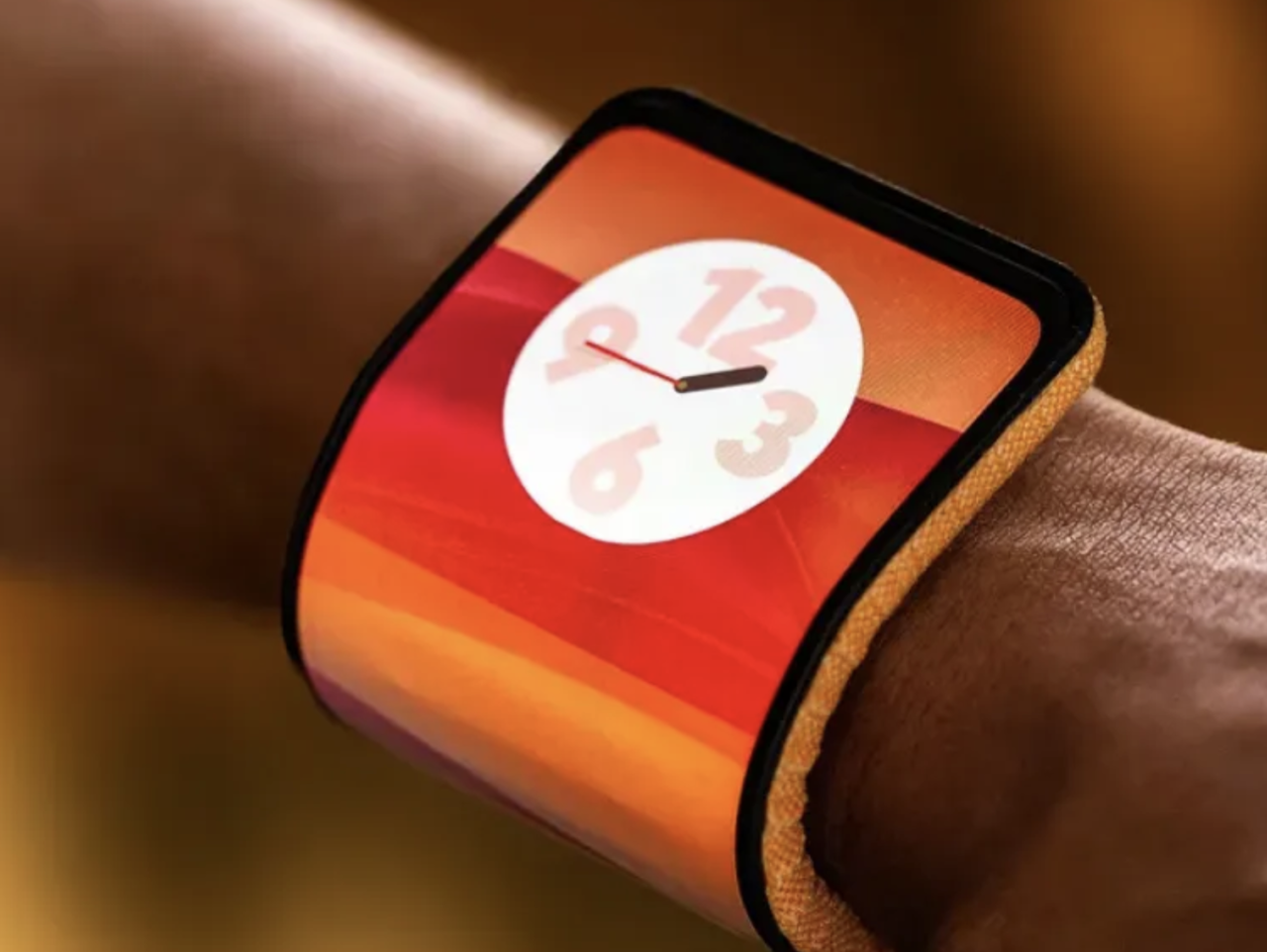
Unified Mobile & Wearable Ecosystems
We eliminate runtime bifurcations by compiling deterministic Kotlin Multiplatform (KMP) business logic to pure shared static libraries while leveraging high-speed direct C++ JSI host objects on React Native for hyper-performant micro-rendering.
- check_circleJetpack Compose & Glance: Zero-reflection declarative runtime tuned for 120Hz surfaces.
- check_circleWearOS Health Tile Fabric: Real-time PPG / ECG interrupt pipelines with micro-wake lock throttling.
- check_circleStaged Canary Rollouts: Deterministic binary hashing with automated crash dump triage.
- check_circleSwift 6 Concurrency: Compile-time data-race safety across distributed thread pools.
- check_circlewatchOS Extended Runtimes: Background core-motion continuous telemetry buffering.
- check_circlevisionOS Bridge: Native RealityKit window sharing and volumetric spatial anchors.
@OptIn(DelicateCoroutinesApi::class)
class TelemetryStreamer(
    private val nativeBridge: CppJsiDirectTunnel
) {
    val sharedBuffer = PinnedByteArray(capacity = 4096)
    suspend fun dispatchFrame(data: SensorPacket) {
        nativeBridge.zeroCopyDispatch(
            handle = sharedBuffer.address,
            vectorLength = data.tensorStride
        )
    }
}Not All Mobile Architectures Are The Same: The MVI Imperative
"Choosing the right architecture is crucial in mobile app development. Here is how YLabZ evaluates the evolutionary path from legacy MVC to immutable MVI."
Traditional division of Model, View, and Controller. The Controller rapidly turns into an unmanageable catch-all for business logic, making isolated unit testing complex and cumbersome.
Separates the Presenter from the View to enable independent unit testing. However, MVP is not inherently reactive and lacks built-in support for asynchronous reactive streams.
Introduces ViewModel with unidirectional data binding. However, mutable state can complicate debugging. Crucially, as noted by YLabz: MVVM clashes with modern SwiftData (which binds directly to Views, making ViewModels redundant or problematic).
YLabz's chosen paradigm. Combines unidirectional data flow with an immutable intent channel (sealed UiState & UiEvent). State changes are modeled as deterministic data objects, simplifying temporal tracking and testing.
KMP vs Truly Native: "With GenAI we can build both before most can figure out KMP Gradle ... LoL"
Direct from YLabz.com analysis: Generative AI tools eliminate the repetitive boilerplate of multi-platform apps. Instead of wrestling with KMP Gradle complexity, experimental bridge bindings, and delayed iOS 1st-party APIs, YLabZ leverages AI to write idiomatic, 100% native Swift and Kotlin apps with maximum 120Hz platform fluidity.
YLabZ / developerY Mobile Firsts
Android Jetpack Compose
2/4 Challenge Winner • Play Store Pioneer- verifiedWrote one of the first articles explaining Jetpack Compose to the community
- verifiedPublished one of the very first Jetpack Compose applications on the Google Play Store
- verifiedWon 2 out of 4 challenges in the first-ever official Jetpack Compose developer challenge
- verifiedInvited nationwide speaker and educator for Jetpack Compose, Kotlin Coroutines, and Kotlin Flow
Apple iOS SwiftUI & visionOS
Apple HQ Trained • Beta Swift Pioneer- verifiedBegan active production development with Swift while the language was in early beta
- verifiedAuthored pioneering technical articles detailing SwiftUI, SwiftData, and visionOS spatial architecture
- verifiedParticipated in an intensive full day of visionOS training at Apple Main Campus (Cupertino HQ)
- verifiedApple reviewed YLabz visionOS spatial projects and educational teaching materials
- verifiedConducted developer training on Combine and Swift Structured Concurrency upon public release
Demystifying Mobile Machine Learning: Multi-Tool Approach
From YLabz.com: "When it comes to Android & iOS, there is no one-size-fits-all solution for ML. Here is our calibrated multi-tool matrix."
Android ML Arsenal
Turnkey APIs for face detection, OCR, and barcode reading; limited customization.
Tightly integrated with Firebase for image labeling and language translation.
Custom model execution with full control over INT8 quantization and GPU delegates.
Versatile modular framework built on TF Lite for gesture, pose, and spatial meshes.
Hardware-accelerated on-device AI runtime featured on Pixel 8 Pro with local privacy.
Apple iOS ML Arsenal
Direct Apple Neural Engine (ANE) hardware acceleration with zero cloud latency.
Drag-and-drop model training directly within Xcode, exporting native .mlmodel artifacts.
Mojo (Python Replacement) & MAX Engine (CUDA Replacement)
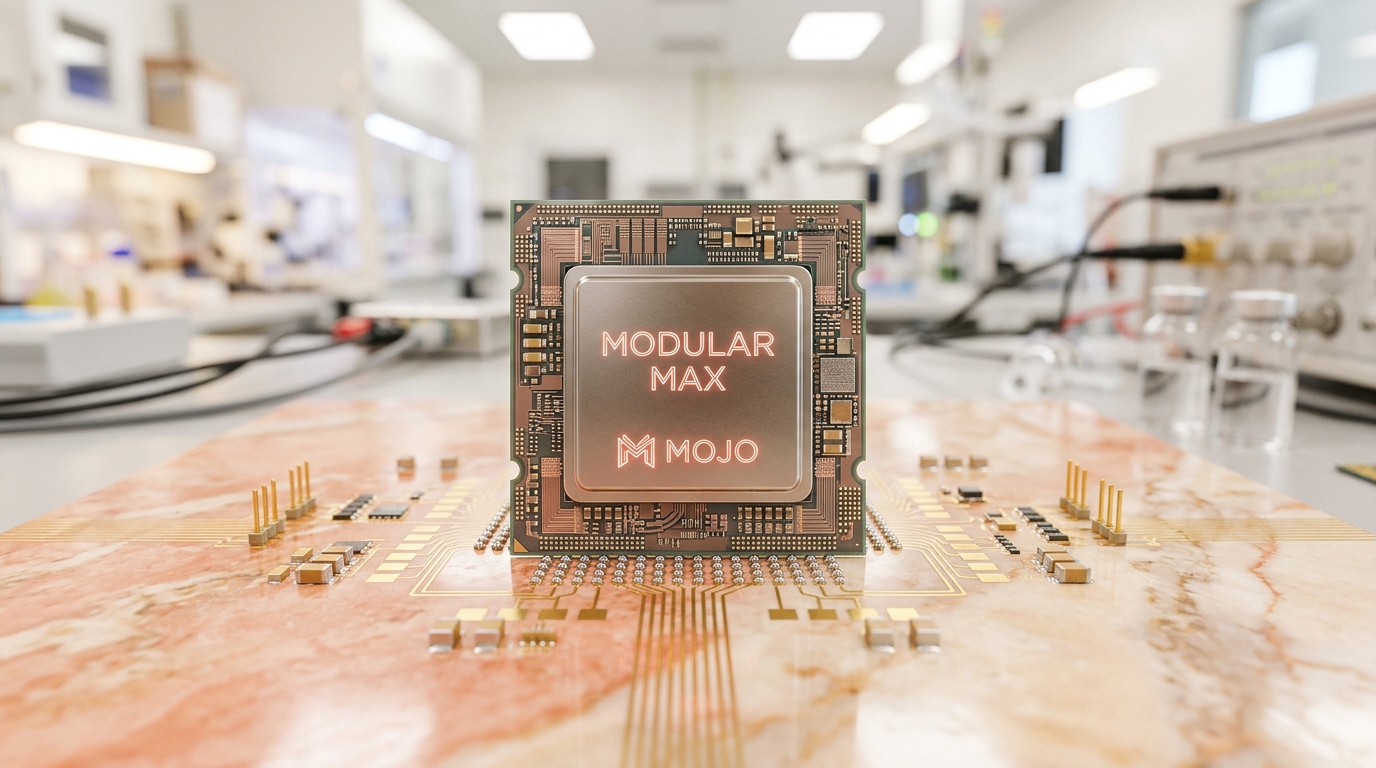
Unified Heterogeneous Acceleration
Compiling PyTorch, ONNX, and Mojo graphs directly down to bare metal across NVIDIA Tensor Cores, AMD ROCm/CDNA, Apple Silicon Metal/ANE, and ARM CPUs.
Why Mojo Replaces Python in the Y? Lab Z Core
Python is loved for its expressive readability, but paralyzed by the Global Interpreter Lock (GIL), dynamic boxing overhead, and garbage collection jitter. Developers have historically been trapped in the “two-language problem”: prototyping in Python and agonizingly rewriting compute-heavy kernels in C++ or CUDA. Mojo unifies both worlds into a single high-performance syntax.
Strict static type checking, memory safety, and immutable by-default arguments without GIL overhead, while retaining def for rapid prototyping.
Zero-cost hardware vector register access via SIMD[DType.float32, 16], autotuning tiles, and parallel multi-core dispatch without C++.
Compile-time lifetime and ownership checking (borrowed, inout, owned) eliminating garbage collection pauses and nondeterministic latency spikes.
Call existing Python ecosystem libraries (NumPy, SciPy, HuggingFace) via Python.import_module() with zero serialization overhead.
- •GIL binds multi-core CPUs to 1 active execution thread
- •Dynamic object boxing causes massive heap allocations
- •GC sweep spikes latency across real-time sensor loops
- •Requires writing brittle C++/CUDA bindings for speed
- •True SIMD parallelism saturation across all CPU/GPU cores
- •Static type checking with zero-cost value abstractions
- •Compile-time ownership (borrowed, inout) with 0 GC pauses
- •Single language: prototype and ship bare-metal in Mojo
from algorithm import vectorize, parallelize
from sys.info import simdwidthof

# Direct SIMD vector mapping in Mojo (replaces slow Python loops)
alias type = DType.float32
alias nelts = simdwidthof[type]()

fn fast_matmul_kernel[M: Int, N: Int, K: Int](
    C: UnsafePointer[Scalar[type]],
    A: UnsafePointer[Scalar[type]],
    B: UnsafePointer[Scalar[type]]
):
    @parameter
    fn calc_row(m: Int):
        for k in range(K):
            @parameter
            fn calc_tile[simd_width: Int](n: Int):
                var a_val = A.load(m * K + k)
                var b_vec = B.load[width=simd_width](k * N + n)
                var c_vec = C.load[width=simd_width](m * N + n)
                C.store(m * N + n, c_vec + a_val * b_vec)
            vectorize[calc_tile, nelts](N)
parallelize[calc_row](M, M)Edge AI, Quantization & Telemetry Models
Eliminating cloud inference latency requires moving compute entirely to edge Silicon. We engineer high-yield INT8 and FP16 quantized model pipelines for on-device computer vision, local small-language model execution (SLMs), and multivariate biosensor forecasting.
ExecuTorch targets with customized DSP micro-kernels and dynamic shapes support.
TFLite delegate binding for Apple Neural Engine (CoreML) and Qualcomm Hexagon.
Low-overhead random forest and gradient-boosted ensembles for real-time sensor anomaly sweeps.
On-Device Neural Vision
Zero-latency human keypoint tracking, depth-map estimation, and surface classification running at 60 FPS on mobile NPUs.
Local SLM Execution
Phi-3 / Gemma-2B quantized to 3.8-bit AWQ executing with zero server-side telemetry or connectivity requirements.
import torch
from executorch.extension.pybindings import _export

# Lowering model to hardware NPU delegate
model = VisionBackboneTransformer()
quantized_prog = torch.export.export(model, example_inputs)
edge_program = _export.to_edge(quantized_prog)
edge_program.tune_for_target("qualcomm_htp", int8_relaxed=True)Spatial XR: Android XR, visionOS & Meta Quest
Y? Lab Z pioneers mixed-reality spatial interfaces across all tier-one headsets. Incorporating production assets and spatial primitives built in synergy with zoeware.com, our spatial architecture standardizes high-fidelity stereoscopic passthrough with sub-millimeter hand-tracking physics.
Spatial panels, volumetric scene graphs, and shared Android core runtime hooks.
RealityKit 4 dynamic lighting, eye gaze intents, and Metal 3 shaders.
Direct integration with zoeware.com interactive spatial modules & physics.
Proprietary kinematic damping eliminating jitter during subtle pinch gestures.
Real-time room reconstruction with dynamic occlusion culling at 90Hz.
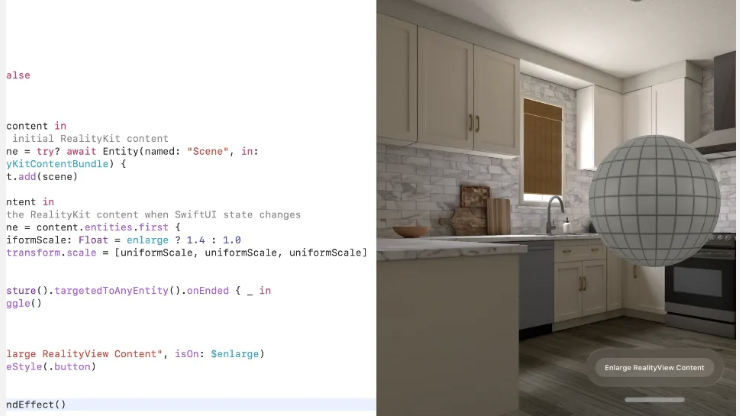
import RealityKit
import SpatialPhysicsEngine

@MainActor
public struct VolumetricMeshSystem: System {
    public func update(context: SceneUpdateContext) {
        let query = EntityQuery(where: .has(ZoewarePhysicsComponent.self))
        for entity in context.entities(matching: query) {
            entity.applyDepthMeshingOcclusion(latencyTolerance: 0.008)
        }
    }
}Decentralized Primitives & Quantum Simulation
Bridging the chasm between trustless peer-to-peer consensus systems and imminent quantum computing breakthroughs. We develop zero-knowledge cryptographic state transitions while hardening data transport protocols with NIST Round 4 Lattice-based post-quantum cryptography.
- verified_userZero-Knowledge Proofs: Sub-second client-side proof generation using recursive Halo2 gates.
- verified_userAudited Smart Contracts: Formally verified EVM and SVM state channels with zero reentrancy surface.
- grainQubit Entanglement Models: Quantum state tomography simulations for fault-tolerant logical qubits.
- grainLattice-512 Hardening: CRYSTALS-Kyber key exchange wrapped over quantum-resistant TLS handshakes.

from qiskit import QuantumCircuit
from qiskit_ibm_runtime import SamplerV2

qc = QuantumCircuit(3)
qc.h(0)
qc.cx(0, 1)
qc.cx(0, 2)
qc.measure_all()

# Execute on noise-mitigated quantum hardware
sampler = SamplerV2(mode=backend)
job = sampler.run([qc])Cross-Runtime Interoperability Spec
| PLATFORM TRACK | HARDWARE TARGETS | LATENCY TOLERANCE | SHARED MEMORY COMPLIANCE | SECURITY LAYER | TELEMETRY HOOK |
|---|---|---|---|---|---|
| Mobile & Wearable Fabric | iOS, WatchOS, Android 15, WearOS 5 | < 8.33 ms (120Hz) | Zero-Copy JSI Host Buffer | Hardware Secure Enclave / StrongBox | LIVE |
| AI / Neural Quantization | Apple ANE, Qualcomm Hexagon, WebGPU | < 14.1 ms (INT8 Tensor) | Pinned Tensor DMA Memory | On-Device Isolated Weight Encapsulation | LIVE |
| Spatial Computing (XR) | visionOS 2, Android XR, Quest 3 | < 11.1 ms (90Hz Stereo) | Direct OpenXR Texture Shared Heap | Biometric Gaze Data Non-Transmission | LIVE |
| Blockchain & Quantum Sim | EVM/SVM, Cryo-Rigs, IBM Eagle Sim | < 318 ms (ZK SNARK) | State Vector Linear Memory | Lattice-512 & Dilithium PQC Primitives | LIVE |
Want to execute against Y? Lab Z testbeds?
Access our developer CLI and cross-platform runtime harnesses for benchmark evaluation.